Articles
Buy vs. Lease AI Servers? Choosing Between On-Premises and Cloud for SMEs
Sep 11, 2026

Enterprise-ready solutions
When a company decides to invest in AI applications, the first hurdle is often not the algorithm, but where the computing power will come from. This is not just a simple equipment procurement issue; it is a strategic choice involving operating costs, information security, and future scalability. When assisting clients in planning AI services, we frequently observe businesses hesitating between "on-premises servers" and "cloud leasing." Both solutions have their applicable scenarios, and the key lies in identifying your company's current technical pain points and development goals.
Data Privacy and Long-Term Total Cost of Ownership (TCO) Considerations
On-premises AI server deployment means that the enterprise places hardware equipment in its own server room. For industries handling highly sensitive data, such as healthcare, law, or precision manufacturing, on-premises deployment provides a higher sense of psychological security and substantial control. Data does not leave the internal network, effectively reducing risks during external transmission.
On a financial level, on-premises servers are categorized as Capital Expenditure (CAPEX). Although the initial cost of purchasing GPU servers is higher, if your AI model needs to run 24/7, the average hourly computing cost over the long term is usually lower than that of cloud services. Furthermore, when processing ultra-large datasets, an on-premises environment can save significant cloud transmission and traffic fees, and it is not affected by network bandwidth fluctuations, providing stable low-latency responses.
Flexibility and Rapid Validation with Cloud Services
Compared to on-premises deployment, cloud AI services fall under Operating Expenditure (OPEX). Their greatest benefit lies in being "ready-to-use" and "pay-as-you-go." For companies still testing the feasibility of AI models or those with volatile demand, the cloud environment offers unparalleled flexibility. You do not need to invest millions in hardware at the start of a project; you only pay for the actual computing hours used.
Another advantage of cloud services is the elimination of maintenance pressure. Tedious tasks such as hardware maintenance, cooling management, firmware updates, and server room power stability are handled by the cloud provider. For SMEs with limited IT personnel, this allows valuable talent resources to be concentrated on the development of the AI application layer rather than the maintenance of underlying infrastructure. When business scale expands, computing power can be upgraded immediately with a few clicks, without the need for time-consuming hardware tendering and waiting periods.
Assessment Metrics: Finding Your Technical Equilibrium
Choosing a solution is not black and white; many companies ultimately opt for a "hybrid cloud" model. We recommend evaluating based on the following three dimensions: First is data frequency. If the computing task is periodic or a short-term project, the cloud is the better choice; if it is a constant operation, on-premises should be considered. Second is management capability. Does your company have the internal capacity to maintain servers and manage cooling environments? If not, cloud or managed services are more appropriate. Third is regulatory requirements. Specific industries may have regulations stating that data cannot leave the country or must be stored in specific physical locations, which will directly dictate the deployment method.
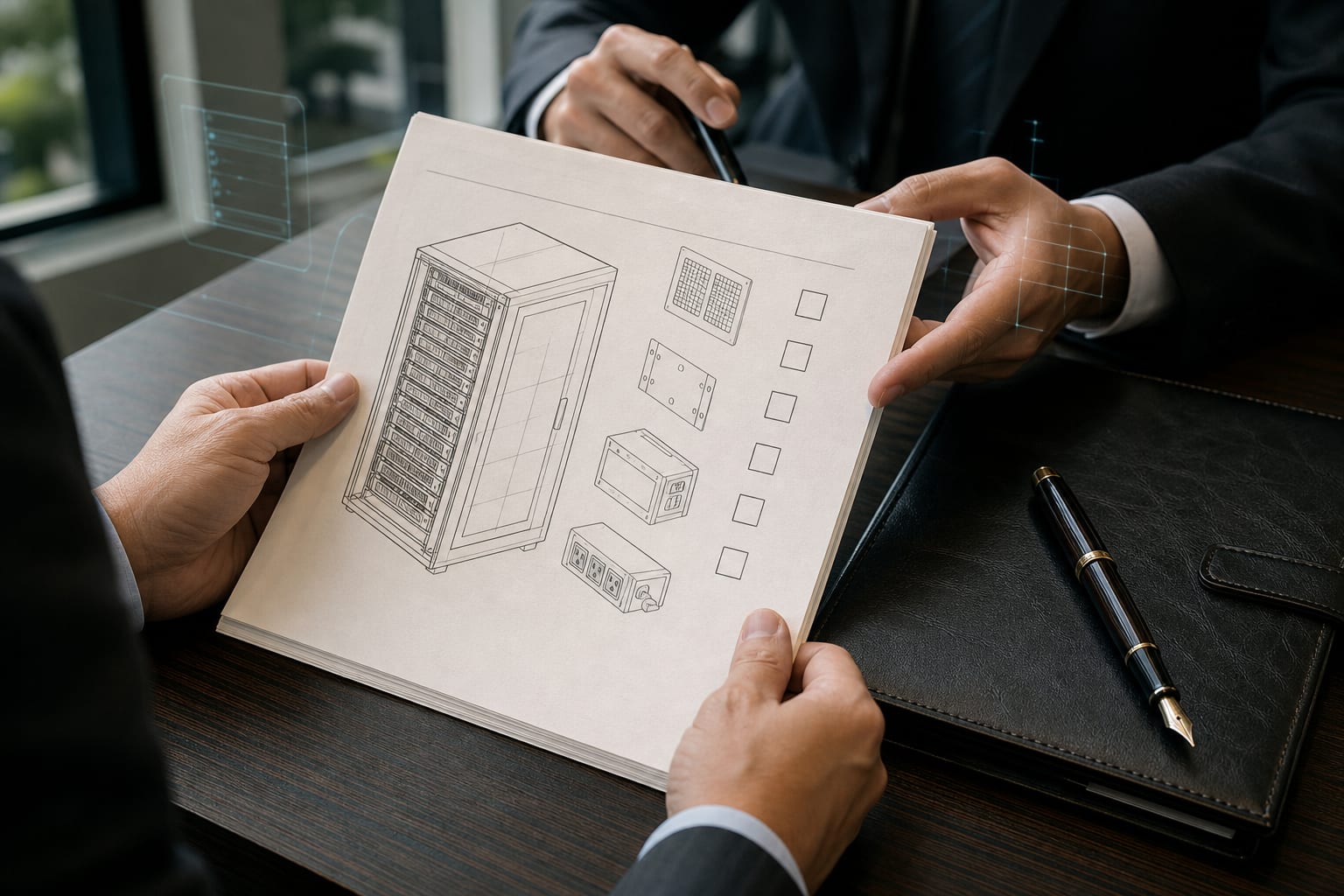
The trade-off between on-premises and cloud is essentially the pursuit of the best balance between performance, security, and cost. Regardless of which path you choose, ensuring that the system can be migrated and integrated at any time according to business needs is the most robust AI development strategy. We assist enterprises in evaluating the appropriate computing architecture to ensure that every cent of your investment translates into tangible productivity.
If you are considering building an AI computing environment, please Contact Us