Articles
Tesla Robot Production Bottleneck: Challenges in Tech Implementation from the Hand Assembly Perspective
Sep 28, 2026
Enterprise-ready solutions
The Price of Flexibility: The Manual Dilemma of Precision Components
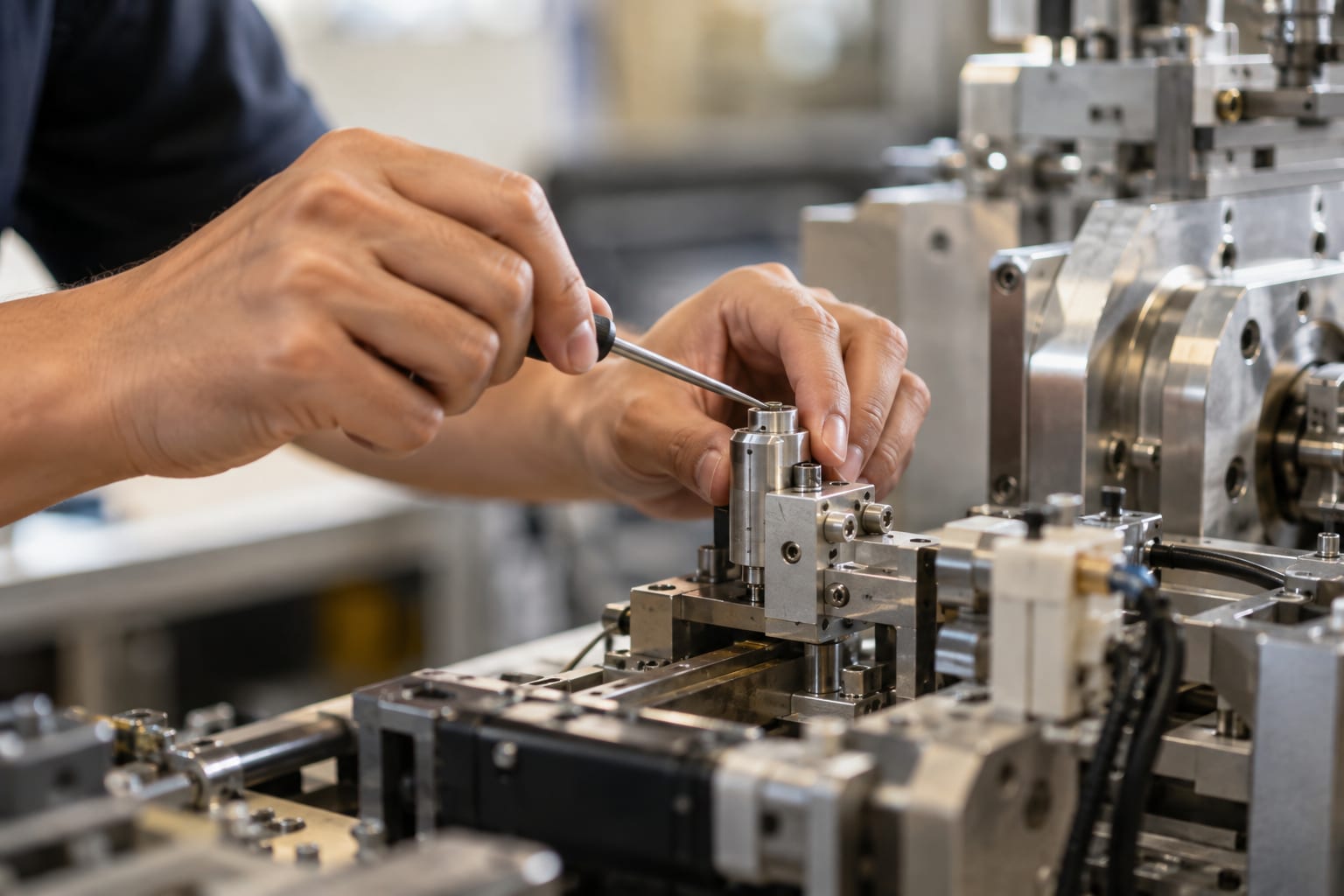
Tesla's Optimus humanoid robot has long been a focal point of the tech world, particularly with its latest version, V3, which showcases hand dexterity nearing human levels. However, these hands are currently the primary obstacle in mass production plans. According to technical reports, the hands feature multiple degrees of freedom and sophisticated tactile sensors. To achieve delicate and lifelike movements, the internal micro-transmission devices and wiring are exceptionally complex. Under current manufacturing processes, robotic equipment is not yet capable of automatically embedding such tiny, high-difficulty components, resulting in most precision assembly stages still relying on manual labor by senior technicians.
For Tesla, which pursues large-scale production, this presents a significant operational challenge. Manual assembly not only means limited capacity but also introduces risks of unstable yields and excessive costs. This serves as a reminder that peak performance in a laboratory does not equate to rapid adoption in a real-world business environment. The chasm between the two often stems from the physical limitations of hardware integration and the maturity of backend support systems.
From Lab to Production Line: The Gap in Technology Transfer
For enterprises, the Optimus case is a lesson in the gap between "technical feasibility" and "economic feasibility." In the realm of IT services, we frequently observe similar situations: a company introduces advanced AI algorithms or automation software, only to find existing infrastructure cannot handle the computational load, or that processes are too fragmented, causing the benefits of automation to be offset by cumbersome system maintenance. The assembly challenge of robotic hands is essentially a lack of depth in system integration. When hardware design outpaces the automation level of current manufacturing technology, an efficiency gap emerges.
In our process of assisting SMEs with digital transformation, we often emphasize the importance of "appropriate design." A system that can be stably replicated and easily maintained often holds more value for companies seeking long-term revenue than cutting-edge solutions that are difficult to sustain. The challenge Tesla faces is how to simplify the internal structure of Optimus to retain functionality while reducing reliance on manual precision assembly—a threshold that must be crossed in all digitalization processes.
The Value of IT Services: Bridging Vision and Practice
When cutting-edge hardware like robotic hands faces production bottlenecks, backend software logic and IT services become even more critical. If the assembly stage cannot yet be fully decoupled from human labor, the key to competitiveness lies in how IT systems optimize this "human-machine collaboration." For instance, using more precise supply chain management systems to track precision component consumption, or utilizing digital twin technology to simulate potential errors during assembly. This support from "soft power" can effectively mitigate the chaos brought by the early stages of hardware mass production.
This also suggests that when evaluating new technologies, enterprises should look beyond the front-end demonstrations and assess "sustainability." A robust IT services architecture should be highly flexible, providing stable management processes and monitoring mechanisms even when technology has not yet matured to the stage of full automation. We are committed to providing the professional support that ensures technology truly lands and generates tangible benefits, moving complex technology beyond being just a laboratory exhibit.
Stable Systems Outperform Perfect Prototypes
The case of Tesla Optimus shows us that technological evolution is not a straight upward line but is filled with practical compromises and breakthroughs. On the path to innovation, corporate decision-makers need a pragmatic eye to identify which tools can steadily improve efficiency today and which technologies are still in their adjustment phase. A professional IT services partner can assist you with risk assessment and process optimization, ensuring every technology investment translates into actual productivity and competitiveness.
If you are considering how to implement new technology steadily within your enterprise environment, welcome to Contact us