Articles
Choosing Your Enterprise Website: Evaluating WordPress vs. Custom Development Benefits
Aug 13, 2026

Enterprise-ready solutions
When you decide to build or renovate a website for your company, the first technical decision you usually face is: should you use a ready-made Content Management System (CMS) like WordPress, or invest resources in full custom development? This decision will impact maintenance costs, website performance, and business expansion flexibility over the next three to five years. In our experience assisting many enterprises with website development, we have found that there is no absolutely perfect technology, only choices that align with current business needs.
WordPress Advantages and Enterprise Use Cases
WordPress powers over 40% of the world's websites, and its core strength lies in its complete ecosystem. For many small and medium-sized enterprises (SMEs) that need to quickly establish a brand image and publish industry information, it is a highly cost-effective starting point. Through ready-made themes and plugins, we can build a platform with basic business functions for you in a relatively short time.
Under the WordPress architecture, content management becomes intuitive. Even without a programming background, you can easily update articles and replace product images. In addition, WordPress has extremely powerful SEO plugin tools that can help you lay a solid foundation for search engine optimization as soon as the site goes live. However, this does not mean WordPress is just a "lite version" website. Through professional development and tuning, it can also handle high traffic. But it should be noted that over-reliance on plugins often leads to slower website loading speeds and increased security risks. If your core business needs are relatively simple and you want to achieve high-quality brand presentation within a budget, WordPress is an ideal strategic tool.
Custom Websites: Built for Unique Business Logic and High Performance
When your business processes involve complex logic—such as special membership grading systems, deep integration with internal ERP or CRM systems, or extreme requirements for web page loading speed—custom development is a more robust investment. Custom websites do not use generic templates; instead, the development team writes code from scratch. This means the website has no redundant code, and performance is usually superior to template-based sites.
Security is another major advantage of custom websites. Because the program architecture is unique, hackers cannot exploit known plugin vulnerabilities to conduct large-scale attacks as they do with open-source systems like WordPress. For financial services, e-commerce platforms, or enterprises handling large amounts of sensitive personal data, this closed and controllable nature provides a higher level of protection. Furthermore, custom websites can be designed completely according to your brand identity without being restricted by the framework of ready-made themes. Although the initial development and communication costs are higher, in the long run, the website offers the highest scalability, allowing new functional modules to be added as the business grows without being limited by the technical architecture of third-party packages.
Core Decision: Defining Technical Paths from Business Goals
When choosing between the two, we recommend you first think about your business focus for the next two years. If the main function of your website is to display service content, attract potential customers to leave contact information, and have content frequently updated by a marketing team, then the operational convenience and build speed provided by WordPress will help you gain a market advantage. During the build process, we will carefully select lightweight plugins for you to ensure a balance between speed and security.
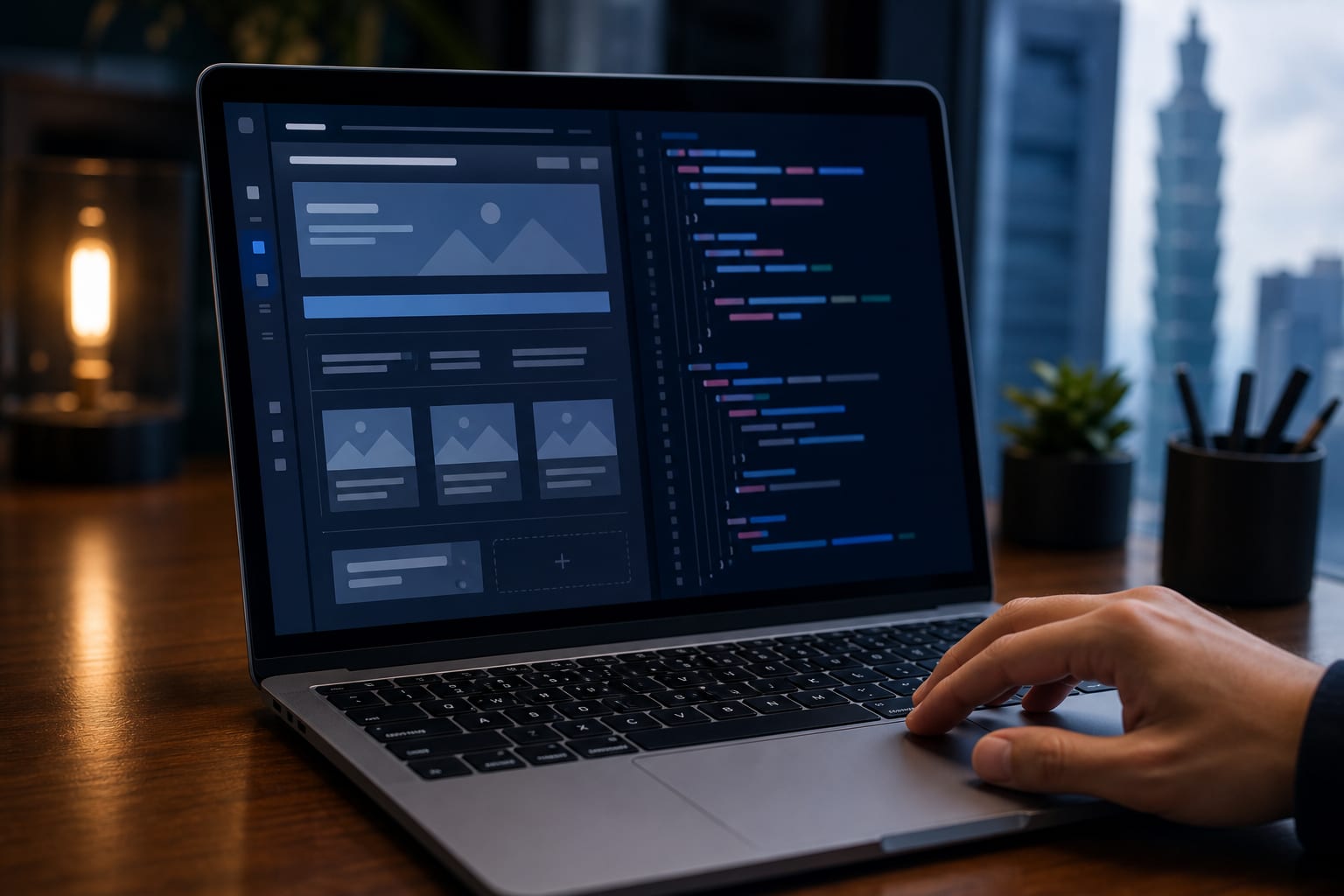
Conversely, if your website itself is the product (such as a matchmaking platform or software service subscription), or if you expect frequent functional changes and custom processes in the future, custom development can avoid the trouble of facing "technical debt" later. Custom development ensures that every line of code serves your business goals and can be deeply optimized according to the access environment of different devices. We have observed that many successful enterprises use rapid prototyping to go live in the early stages but switch to a custom architecture once the business stabilizes to pursue superior user experience and security standards.
Regardless of which solution you prefer, the key is to choose a partner who understands your business logic and provides long-term technical support. A website is not a static product that ends once it is completed; it requires continuous maintenance, security updates, and performance monitoring. We have extensive experience in the field of website development and can provide the most objective technical selection advice based on your budget scale and business blueprint. Contact us