Articles
"14 Major Challenges in China's Electronic Information Engineering and Technology": Developing AI, New Sensing, and Optoelectronic Semiconductors as Future Priorities
Oct 5, 2023
Enterprise-ready solutions
The Chinese Academy of Engineering (CAE) announced the "14 Major Technical Challenges in the Development of China's Electronic Information Engineering and Technology (2023)" on September 25. According to reports from China's Jiwei.com, this announcement covers 14 projects, including the digital domain, informatization, microelectronics and optoelectronics, optical engineering, measurement and instrumentation, networking and communications, network security, computer magnetic fields and electromagnetic environmental effects, control, cognition, computer systems and software, computer applications, marine network information systems, and response to major emergencies.
These technical challenges indicate the direction and focus of China's development in the field of electronic information. Among them, challenges in the digital domain may involve the digital economy, digital transformation, and the application of digital technologies in different industries. Challenges in informatization are likely closely related to information security, big data, and AI. Challenges in microelectronics, optoelectronics, and optical engineering may involve new materials, new devices, and advanced optical instruments. Furthermore, technical challenges in measurement and instrumentation may involve more precise measurement technologies and advanced equipment. Challenges in networking and communications may involve next-generation network technologies, communication system optimization, and network scale expansion. Similarly, technical challenges in network security may be related to data security and network defense.
Technical challenges in computer magnetic fields and electromagnetic environmental effects may be related to issues such as magnetic field interference and electromagnetic radiation. Challenges in control and cognition may involve automatic control systems, intelligent perception, and machine learning technologies. Challenges in computer systems and software may be related to supercomputing, cloud computing, and software engineering. Challenges in computer applications may involve human-computer interaction, mobile applications, and social media. In addition, technical challenges in marine network information systems may be related to marine monitoring, resource development, and marine information security. Technical challenges in responding to major emergencies may be related to disaster warnings, emergency communications, and rescue command systems.
The publication of these technical challenges sets new directions and goals for China's scientific and technological development. The CAE announcement provides important reference and guidance for research institutions, enterprises, and technical personnel in related fields. Fully addressing these technical challenges will promote innovative development in China's electronic information field, enhance the country's technological strength and competitiveness, and provide strong support for the realization of the Chinese Dream.
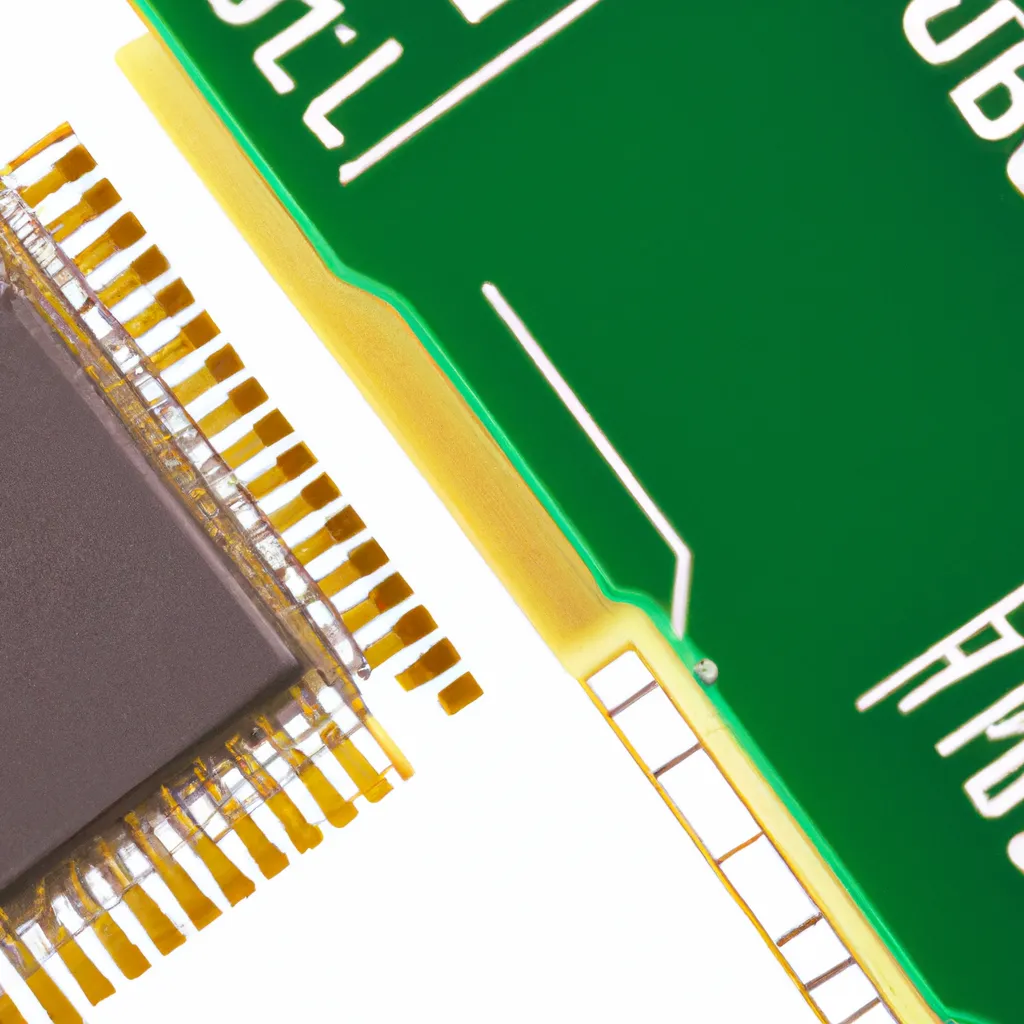
According to the CAE, silicon process nodes have shrunk to 1nm, indicating that we are approaching physical limits. However, Chinese engineers are aware of this issue and believe they need 3D integration, Chiplets, and advanced packaging technologies to achieve breakthroughs. They hope to integrate microelectronics and optoelectronic technologies within chips to further improve the performance of optical communications. These tasks have all been listed on Beijing's to-do list.
In addition to the priority projects mentioned above, information security, AI, and quantum computing are the items most frequently mentioned by Chinese officials. As technology continues to advance, we must also consider how to protect these emerging technologies and the data they generate. The importance of information security is self-evident, and the development of AI and quantum computing also requires corresponding security safeguards.
Furthermore, 6G is held in high regard as the next generation of communication technology. Driven by AI and big data, the demand for vertical applications is continuously growing. 6G will work with other advanced network technologies to meet these demands and drive the next wave of development across various industries. This will bring faster, more stable, and more reliable network connections to people, facilitating data transmission and application.
Overall, the CAE has proposed a series of important technical development directions, including 3D integration, Chiplets, advanced packaging technology, the integration of microelectronics and optoelectronics, information security, AI, quantum computing, and the research and application of 6G communication technology. These projects will play a major role in driving China's industrial development and technological innovation. Chinese engineers are working continuously in hopes of achieving breakthroughs in these fields to advance China's technological strength.
"Marine network information systems" are intended to further enhance marine monitoring and control capabilities. News reports indicate that China has already begun operating a complex underwater surveillance network. The CAE's list of 14 items specifies Beijing's expectations to establish underwater nonlinear acoustic field theory, achieve optimal control and utilization of underwater acoustic fields, and make breakthroughs in new sensing fields such as marine fine remote sensing and non-acoustic detection, ocean-going vessel meteorological navigation, cross-domain communications, and underwater information processing.
China also hopes to further enhance its marine monitoring and control capabilities by building "marine network information systems." This refers to the construction of a series of marine monitoring facilities and network systems to achieve the collection, transmission, analysis, and application of marine data. China is committed to ensuring maritime security and enhancing national maritime strategic capabilities through the construction of such systems.
The 14 items listed by the CAE demonstrate China's expectations and efforts in the field of marine monitoring and control. Among them, establishing underwater nonlinear acoustic field theory is considered an important goal. The establishment of this theory can help people better understand and master the characteristics and patterns of underwater acoustic fields, thereby achieving optimal control and utilization. This is of great significance for monitoring underwater environments and the rational utilization of marine resources.
In addition, China hopes to achieve breakthroughs in new sensing fields such as marine fine remote sensing and non-acoustic detection, ocean-going vessel meteorological navigation, cross-domain communications, and underwater information processing. These fields are vital for enhancing marine monitoring and control capabilities and driving marine technological innovation. By breaking through traditional sensing methods and technologies, China can better respond to marine disasters, improve the efficiency of marine resource utilization, and promote the development of the nation's maritime industry.
China identifies AI, optoelectric semiconductors, as challenges it wants to crack