Articles
The First Step in AI Transformation for SMEs: Start with These Three Practical Applications
Oct 5, 2026
Enterprise-ready solutions
In the AI era, the challenge for SMEs is often not "whether to do it," but "where to start." Amidst an overwhelming sea of technical jargon, decision-makers are most concerned with how to transform investments into actual output and efficiency. Rather than chasing unreachable full automation, we suggest starting by solving operational pain points: establishing small, high-impact experimental applications and expanding gradually. Below, we have outlined three AI application scenarios most suitable for Taiwanese SMEs to get started.
Intelligent Customer Service: Upgrading from Rule-Based Dialogue to Semantic Understanding
Traditional customer service bots rely on preset keywords and tree-based menus. Once a customer's question deviates slightly, the system fails, ultimately requiring a transfer to human agents. This not only fails to reduce employee workload but can also decrease customer satisfaction. By introducing generative AI technology, we can help you build customer service systems with semantic understanding capabilities. These systems can grasp a customer's true intent; even if the word order is messy or colloquial, AI can accurately extract answers from company product manuals and FAQs.
For SMEs, the greatest value of this application lies in "24/7 professional responses." When your business expands across different time zones or receives inquiries outside business hours, AI can instantly solve over 80% of repetitive questions. Highly complex cases are then handed over to professionals. This human-machine collaboration model significantly reduces labor costs while ensuring every customer feels professional service quality immediately.
Exclusive Corporate Knowledge Base: Solving Technical Gaps Caused by Talent Turnover
SMEs often face the risk of key technology or experience being "stored in the heads of senior employees." When employees leave or retire, precious operational know-how often vanishes. We recommend using AI to build internal corporate knowledge management systems. You can feed years of project reports, maintenance manuals, contract records, and even meeting minutes into a controlled AI environment to create your own "Corporate Brain."
When new employees encounter problems, they no longer need to dig through folders or frequently interrupt senior colleagues. Simply by asking questions in natural language, AI can pinpoint solutions from a massive database. For example, "What was the special specification quote for Customer A last year?" or "What are the steps for machine red light code 502?". This application significantly shortens the learning curve for employees and ensures internal information flow is transparent and efficient—a foundational infrastructure for consolidating corporate competitiveness.
Operational Data Prediction: Optimizing Inventory and Resource Allocation
In the past, inventory stocking and shift planning for SMEs mostly relied on the owner's experience or simple spreadsheets. In a volatile market, this model easily leads to inventory backlog or stockout losses. AI has a natural advantage in processing large volumes of historical data, helping you identify hidden trends from past sales records, seasonal fluctuations, and even weather information. The data analysis modules we help clients build can forecast demand for the next one to three months, assisting procurement departments in making more precise judgments.

For the manufacturing or service industries, AI can also be applied to preventive maintenance for equipment. By monitoring equipment operating data, AI can issue warnings before failures occur, avoiding losses caused by downtime. This type of application does not require a massive upfront budget; by starting with core operational data, you can see performance improvements in a short time. We recommend focusing on a single product line or specific department in the initial phase to verify the accuracy of the prediction model before scaling up.
Stable Hardware Foundation: The Importance of AI Servers
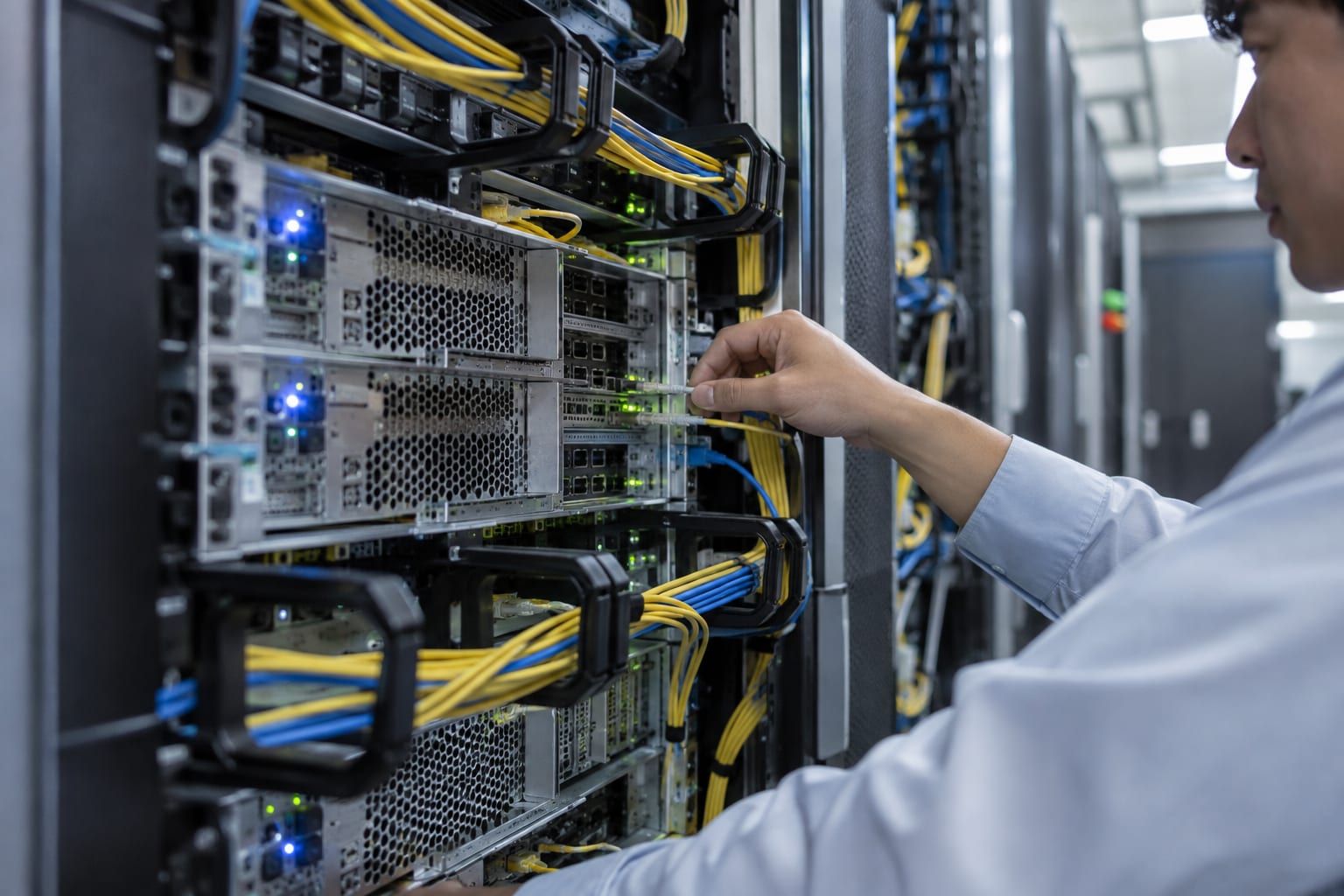
To ensure the smooth execution of the aforementioned applications, a stable computing environment is a prerequisite. Many enterprises use public cloud services during the testing phase, but as data volume increases and security concerns arise, owning your own AI server becomes a more cost-effective choice. We provide one-stop services from hardware procurement and environment deployment to application development, ensuring your data remains within the internal network while balancing computing performance and information security. Choosing the right AI server is not just about buying equipment; it is an insurance policy for your enterprise's digital transformation. Regardless of which digital stage your company is currently in, we can provide the corresponding technical support. Welcome to contact us.